
 Kate seems to always be in trouble at school. Well, she just can’t help telling it like it is, even with four-year- olds. She likes her job and tries really hard, but the words just come out. At home things aren’t much better. She keeps house for her eccentric, scientist father and teenaged sister. To top it all off, her father has come up with an idea to keep his assistant from being deported. The young man can simply marry Kate. Problem solved!
Anne Tyler has done it again. She kept me smiling from cover to cover. The novel is full of quirky, strong characters that play off each other perfectly. I couldn’t help imagining the screen play and trying to decide who to cast as the major actors. This book is part of the Hogarth Shakespeare series, in which modern authors re-imagine Shakespeare’s plays, and as such, it isn’t a great success. Kate is not a shrew, just an outspoken, honest woman. In fact she is very patient with her demanding father and bratty sister. So just ignore the Shakespeare part and enjoy the book for what it is – a delightful story about a delightful young woman.
eGalley review Publication date 6.21.16
 In 1906, San Francisco, fifteen-year-old Mercy Wong is determined to have a successful future in business and help her family. She has read and memorized a business book by a strong female Texas cattle rancher, and applies the business principles to her life. Mercy talks her way into an exclusive girls boarding school where she is ostracized to some degree. She is Chinese, low-class, from Chinatown in a time of ethnic segregation. She is at the boarding school when the devastating earthquake hits. The earthquake and subsequent fires destroy Chinatown and Mercy learns that her mother and little brother are dead. Mercy organizes the girls and guides them to the park and begins to address the immediate needs of food and shelter. As the park fills with survivors, Mercy works to feed the masses.
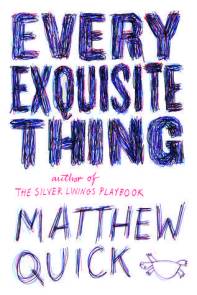 Soccer star Nanette is an only child raised in a privileged environment. Colleges are competing for her to join their team with the lure of a full academic scholarship, yet Nanette is unhappy. Nanette does not enjoy playing soccer and pretty much does not enjoy anything. She is floundering. She is given a book published years ago and long out-of-print and identifies with the non-conformist main character. Nanette strikes up a friendship with the now elderly author who lives an isolated life. The author becomes something of a grandfather figure to Nanette who hangs on his every word. The author plays matchmaker by introducing Nanette to a young man also mesmerized by the book.
 Sweet, thoughtful Isabel is once again confronted with a moral dilemma. She made a promise to keep a friend’s secret, and then finds that in order to keep that secret, she must betray another friend. If you are a reader of the Isabel Dalhousie books, you know that she must consider, and reconsider all of her actions. And so we are privileged to see the working of her mind as she struggles with her conscience. I very much enjoy reading about Isabel’s life. It is so gentle, calming, that it makes me feel that people are civilized after all. This is advertised as a short story, but is either a long story or a short novella.
 Abi sees Lucy everywhere. She forgets for a second that she’s gone and then is devastated again when the memory returns and she knows that she will never see her again. That’s what started it all, for Bea looked so much like Lucy. Emotionally fragile following the death of her identical twin sister, Abi is easily drawn into the life of the outgoing twins Bea and Ben, and is thrilled when invited to share their luxurious house. But odd things keep occurring, objects go missing, conflicts arise and Abi begins to think that she is losing her fragile grip on sanity.
 Two hundred thousand years ago modern humans appeared in Africa. Language was completely formed about 100,000 years ago, but when did written communication begin? They had our bodies and brains, but when did they become us?
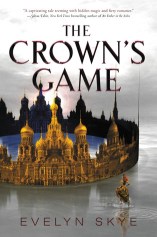 Imperial Russia is in need of the services of a Royal Enchanter to protect the realm from threats. Years of peace have lulled the people of Russia into forgetting that magic was part of the country’s defenses. However, in secret, two enchanters have separately been trained to one day stand by the Czar’s side and become the magical power beside the thrown. The problem? There can be only one Royal Enchanter decided by a duel to the death. The contest is to be conducted in rounds with each enchanter to display their magical prowess to honor the Crown Prince, Pasha. Of course both enchanters are so likeable that the reader is set up to be crushed when one has to die. Vika is a kind, beautiful and vivacious young lady, oblivious of her parentage thinking her father is the man who raised and trained her. Nikolai is a dashing, equally kind and gentle young man who happens to be the Crown Prince’s best friend. Prince Pasha has no idea his buddy is an enchanter so we have a little betrayal set up here. Pasha is drawn to Vika but he is longtime friends with Nikolai. He must decide the victor knowing the other must die.
 Maya’s father is the Raja, ruler, of the Bharata Kingdom. Her mother, one of the Raja’s many wives, died when Maya was quite young leaving her upbringing to the petty wives in the harem. For the most part, Maya is shunned because of her horoscope foretelling a promise of Death and Destruction. She gains notice from the Raja when he asks his daughter to commit suicide on the eve of her marriage. Fortunately, Maya is whisked away at the last minute by Prince Amar, who turns out to be the ruler of the Otherworld – something similar to Hades. As Amar’s Queen, she will assist in deciding human fates and keeping the delicate balance of life and death. Things go totally awry when Maya listens to lies that lead to doubting Amar’s claims and love.
 Withdrawn, awkward, and lonely Cassie’s life rapidly tumbles into darkness. She hears a voice punishing her, criticizing her, controlling her. She thinks finding a human foot on the beach triggered the voice. The small beach community has suffered a series of unsolved murders, all young women, and at first Cassie thinks the voice belongs to the murdered woman that had been dumped into the ocean.
 Britt-Marie believes in normal life, a life with rules and regulations. For instance, cutlery drawers must be arranged just so: forks, knives, spoons. One needs coasters for cups and glasses. Dinner is at six. Lists are very, very important. Britt-Marie is very good at making lists. Britt-Marie is also very good at cleaning, but Britt-Marie is not very good with people. They just don’t understand that her advice on living a normal life is helpful, not critical. Then Britt-Marie’s normal life is upset and her need of employment drops her in a tiny, economically depressed town, surrounded by noisy, dirty children and adults who don’t lead normal lives.
 Mary North and her best friend Hilda saw the coming war as a great adventure. As soon as war was declared, Mary North signed up. She left finishing school in Lausanne and hurried to London, determined not to miss a minute of the war. Her father was an important man and she was quite sure that she would be given a position of responsibility, that she would make a difference, that this war could not be won without her. Much to her chagrin, she was assigned to be a school mistress. Tom Shaw, an educator in charge of school evacuation, decided that the war wasn’t for him. He felt it would make him into a barbarian. He and his flat mate, Alistair, have decided that there are many ways to serve without actually shooting a gun. But Alistair, an art restorer, and just finishing up evacuating the Tate’s art to a safe location, has decided to join up. These quite different people are destined to have their lives entwined by the war, to have their lives changed forever by events beyond their control.
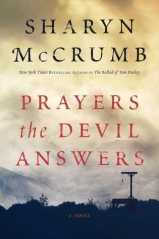 Moving to town was a hard thing, but the jobs were in town, and Mr. Hoover’s Depression had no end in sight. A regular paycheck seemed like an answer to prayer. And the schools were better. So Ellie and Albert and the two boys left the mountains and moved. Albert got hired on as a deputy sheriff and things settled in. Then Albert got himself elected sheriff, and things began to look up. Ellie prayed so hard that Albert would be safe, not shot or killed in a car wreck, or such like. Instead he took ill and died of pneumonia – prayers the devil – when you get your wish and it does you no good. Desperate to find a way to support her family, Ellie convinces the authorities to appoint her to serve out her husband’s term as sheriff. She is a strong minded woman and can handle the job. But then an execution is required, and an execution by hanging must be performed by the sheriff, and that task is considered too difficult for a woman.
 Thorn has amassed many survival skills to assist him when he leaves home to search for his father who has been declared an outlaw. Thorn uses all of his skills when he is captured by slavers and sold to the Executioner of the Shadow Throne in the nearby kingdom of Gehenna. Tyburn, the Executioner, is tasked with killing those involved with the murder of the royal family. He is a man to be feared and Thorn treats him with respect and gives him his distance. When they arrive at the Shadow Kingdom, he meets the young princess, Lily. With the murder of her parents and her elder brother, it is up to her to rule the Shadow Throne. The Shadow Kingdom embraces all that is dark, from raising the dead to harboring bats. But Lily is quite charming and not at all horribly bleak like her kingdom. She and Thorn immediately become buddies. She needs the support because someone has attempted to kill her twice now and the pair are determined to discover the villain. Lily’s uncle, Pan, insists Lily marry the foppish prince in the next kingdom to better protect their lands. Lily wants nothing to do with the witless prince who harbors a mean streak.
 Timbuktu . . . the name evokes an inaccessible, mysterious place in darkest Africa. But it seems that in the fifteenth and sixteenth centuries it was quite accessible. Scholars from distant lands flocked to the city to study. It was a rich, lively place with more than a hundred scholastic institutions. Manuscripts were bought, sold and produced and most of them were beautiful with goatskin covers, inlaid with semiprecious stones, filled with fine calligraphy and complex geometrical designs. They contained not only religious scholarship but ethics, logic, medicine, history, poetry . . . every subject imaginable.
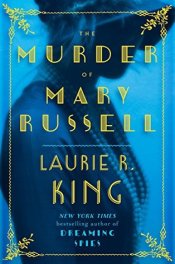 When Mrs. Clara Hudson came home from the market she had no cause to feel uneasy. It was a beautiful day, she had to prepare for a party, and she had perfect strawberries. But something felt wrong, smelt odd. She put the kettle on and set out to find Mary. Instead she found muddy footprints, a broken lamp, a slim knife jutting from the wall, drag marks leading to the door, and two pools of blood. – a lot of blood. Now she recognized the odd smell. It was the smell of gunshot, and Mary is nowhere to be found. Surely Laurie King wouldn’t kill off Mary . . . or would she?
 YA Lit Ramblings
You must be logged in to post a comment.