
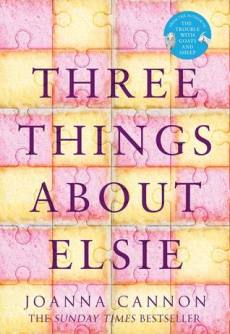
 Eighty-four-year-old Florence was quite happy living in her own flat. But the council decided that she needed help coping and now she finds herself at Cherry Tree, an assisted living facility. Unfortunately, Florence, considered difficult, stubborn, far too independent, has been put on probation. If things don’t change, she will be sent to Greenbanks. But Florence is sure (well, almost sure) that the odd things that keep happening to her are the fault of a new resident who is out for revenge. He looks just like Ronnie Butler. Even Elsie says he looks just like Ronnie. The problem is, Ronnie drowned in 1953. This is a little mystery story and a big story about the struggles with the onset of dementia. And it is also a story about how all lives make a difference. Flo is a wonderful character, full of life, funny. And she is trying desperately to understand what’s happening to her. Her best friend Elsie helps her sort things out, always makes her feel better. It is a bittersweet, gentle story, told with love and compassion.
eGalley review Publication date 8.7.18
 I have enjoyed Eric Flint’s Ring of Fire alternative history books, and just had not noticed that he writes other stuff. I have noticed now. This really long book (544 pages) contains some Ring of Fire short stories and a short novel, several other short stories, a long steampunk novella, and a lot more. I got a kick out of his three stories “From the Pen of a Grouchy Atheist.” They were outrageous, and a ton of fun. As a big plus, Flint’s introduction to each story in the book includes a bit about its origin. Flint fans will love this book.
 The Federalists were not happy campers when Thomas Jefferson appointed Albert Gallatin Secretary of the Treasury in 1801. This was the man who was responsible for the Republican win. And now, this immigrant who spoke with a heavy French accent, who was from back county Pennsylvania, who had been Hamilton’s greatest critic, who had objections to spending any federal money, was to be in charge! Disaster was imminent! But Gallatin understood finance very, very well, and he knew that he must work to make the new nation debt free if it were to survive. And to free the country from debt he knew it could only be achieved by restraining the federal government’s fiscal power. I am amazed that Gallatin is so little known. Besides his influence in finance he was an adviser to Jefferson, Madison, and all of the notable Republicans. He served on the Treaty of Ghent commission that ended the War of 1812, was ambassador to France and Britain, helped found New York University, studied the languages of Native Americans and founded the American Ethnological Society. Whew. Gregory May, an internationally known tax expert, has written a very readable book, full of interesting asides, interesting facts. Gallatin became flesh and blood to me, a real person, and a very important person in the history of the United States of America. This is a must read for anyone interested in early American history. Highly recommend.
 For twenty-three years, from 1950 to 1973, Arkady Polishchuk, a Russian Jew, worked as a journalist for Russian media, and for much of that time he also worked on behalf of persecuted Jews and Christians who were denied emigration. His memoir, told with humor and irony, chronicles unbelievable suffering, forced labor, show-trials, constant surveillance. He lived in the fear that soon, he too, will be targeted. After he was given permission to emigrate in 1977, he continued working to end these abuses. This book was eye-opening for me. I’d been aware of the human rights abuses in Russia during that time. But when a name, a face, is put on the suffering it becomes all too real, almost unbelievable. It describes a depressing life, where a three-bedroom apartment will house three families, where all too often people live on the edge of starvation. Where people can just disappear. But it is told in such a matter-of-fact manner. That’s what life is like, don’t worry about it. Reading this was sometimes difficult, but it was good for me, made me think about how much we take our life, our human rights, for granted.
 Work keeps piling up for Isabel. Editing the Review of Applied Ethics takes so much time, and Cat seems to always need extra help at the deli. She would love to have more time with her boys. Magnus and Charlie are growing up far too fast. Jamie thinks that perhaps hiring some help would be a good thing, and Isabel reluctantly agrees. So, an au pair from Italy and an editorial assistant from the university join the household. But, somehow, things get more difficult for Isabel. There is a bit more mystery in this book than usual, but it isn’t the main story line. Or maybe it is. It’s hard to tell, since most of the book is filled with Isabel’s musings. And that’s why I love these books. Isabel can fill several pages deciding just why she invited a friend for coffee. Mostly, everything is quiet, gentle, so very civilized. I need that. This is book 12, but there is a bit of background included so it can be read alone.
 Svanhild likes the feel of the steering oar, the feel of the water. Her son Eystein has six summers and is a tall frail boy. Unlike his parents, he has no love of the sea. He hates the sea and the cold, longs to live on the land. The fleet is headed for Iceland where they will shelter for winter, and Svanhild has secret hopes that it will stay a bit longer so that Eystein can grow stronger. Ragnvald Eysteinsson is tired of fighting King Harald’s battles. He thought that becoming King of Sogn would let him stay home, would give him peace and contentment. But he was wrong, so very wrong. This second book in the series begins six years after the end of
  Alien probes were sent to Earth fifty years before the story opens. Those born after exposure to the probe developed super powers. Earth, or Omnisteller Corporation the ruling entity, can’t just let these folks wander free so they are imprisoned off planet in huge maximum security space stations. Sanctuary is the space prison where teen Kenzie lives and works as guard under command of her mother. It is isolating work with frequent drills, yet she has never had to deal directly with the prisoners – teens her age. Children with powers, some younger than 10 have been sent to Sanctuary for no real crime other than having powers. During a mastermind jail break, Kenzie is taken hostage and she sympathizes with her captors. They must band together for survival.
 The sequel to
 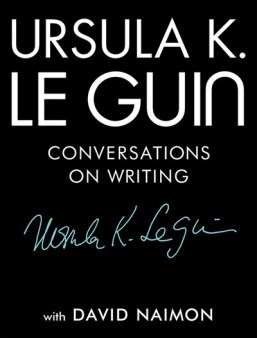 David Naimon is a writer and the host of Portland, Oregon based podcast, Between the Covers. This all began as a series of recorded interviews with Ursula Le Guin for the show. Then they came to the conclusion that the interviews would make a good book. And they were right. It is fascinating. Naimon and Le Guin discussed writing in general, Le Guin’s books in particular. Excerpts from her works and from books she found useful are included. They discussed philosophy, poetry, nonfiction, fiction. Reading the book you feel included in the conversation, as if you were just sitting with friends. And it is a rare thing to be taken inside the mind of such an intelligent, thoughtful, interesting person. It is a little book that I read quickly. Now I think I will read it again, slowly.
 This anthology is all about space exploration and discovery. Neil Clarke says that it is like “all the episodes of Star Trek where they discover some new phenomena, make contact with a new species or explore the remnants of some long forgotten race.” Thus, the title. The list of authors sounds like a list of Nebula or Hugo award winners…. Ken Liu, Nancy Kress, Elizabeth Bear, Michael Swanwick, James Patrick Kelly…you get the idea. It’s hard to pick a favorite. Elizabeth Bear’s The Deeps of the Sky about an otherworlder sacrificing much to save an intruder is a contender. Sailing the Antarsa by Vandana Singh is beautiful and poetic. The Symphony of Ice and Dust by Julie Novakova is like nothing I’ve read before. I loved them all
 Willa has always been the one to calm things down, smooth things over. Starting with her mother’s volatility, she was the child who made things better. We get little glimpses of her life as she hones her skill as a peace maker . . . a college student contemplating marriage, a young widow, a retiree married to her second husband. And then with a phone call from a stranger and a case of mistaken identity, she begins to reinvent herself.
 The spaceship is all Romy has ever known. She was an unauthorized/unexpected baby while her parents were the only crew members not in stasis during a long distance voyage to establish a colony. The crew in stasis died years ago, then Romy lost her parents. All alone for years with a batch of frozen embryos, she has no choice but to continue the mission. Transmissions from Earth have a long delay, so there is no one to help if an emergency situation arises. She learns that NASA sent another ship to catch up to her. Finally, she will not be alone! But what are the true intentions of this ship’s captain?
 Dawn in London’s public gardens. The January wind is fierce. A hunchback slowly plods along. Then there is a loud crack and he falls to the ground. A crowd begins to gather, and then notices that the man was not a hunchback. Instead, a stone, a very large stone, circles his neck and the pressure caused it to snap. On the stone is an inscription in Latin. Five years ago Boston was the scene of several Dante inspired murders, and when another murder seems to be linked to Dante’s “Purgatory”, Scotland Yard begins to wonder about a possible connection. The poet Christina Rossetti also wonders about a connection. Her brother, the strange, obsessed, artist and writer, Dante Gabriel Rossetti, has disappeared. Is he is connected to the murders? Is his life is in danger? She needs help deciphering the literary clues she has found and enlists her friends, Robert Browning and Alfred Tennyson and Dr. Oliver Wendell Holmes. As he did in The Dante Club, Matthew Pearl, mixes real people into his fiction. And he does it so well. The four writers’ personalities are complex, interesting. The plot takes many unexpected turns and sucks the reader down into the London of the mid-nineteenth century. The suspense builds, and the book could not be put down.
 It is summer in Beartown. The citizens are trying to come to grips with the impossible events of the previous winter, and they are doing pretty good. Until they learn that the hockey club is bankrupt and will be disbanded. Many of their players are now playing for Hed. Hed is not just a rival town. Hed is the enemy, Hed is hated beyond reason. And now they will be the only hockey club in the area. For a town that has only hockey to love, this is devastating. It seems, though, that there will be a happy ending. A local politician has found money to keep the club afloat for now and has found a coach. A female coach! But there will be hockey, so all is well. Or is it? The book is told in the first person, someone trying to explain to you just what their town was and is and perhaps will be. And it is deeply moving. Fredrik Backman is Swedish, writing about a tiny town in Sweden, writing about hockey. I know nothing about hockey, have never been to Sweden. Yet this book moved me. I cared deeply about the characters, as if they were my friends, my children. When I finished the book, I was emotionally drained. This is the second book about Beartown, and to truly understand this one, the books should be read in sequence.
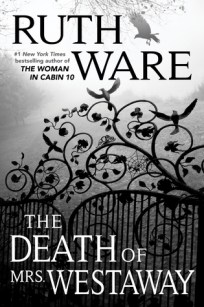 Hal is overwhelmed by her life. No, it’s the lack of a life. Hal was eighteen when her mother died a couple of years ago. Her only way to earn a living was to take over her mother’s tarot reading booth at Brighton Pier. But it’s not much of a living, and she now owes money to a loan shark. Then a miraculous letter appears from a solicitor in Penzance. He informs her that her grandmother has died and she is a beneficiary of her estate. Hal knows it must be a mistake. Her grandparents had been dead for twenty years. She knows she must write back and tell them that. But she desperately needs money, and if she can keep up the pretense, a few hundred pounds would give her breathing room. So she books a ticket to Penzance. Ruth Ware just keeps getting better, and this book has it all. A plot with many twists and turns, family secrets and family quarrels, a creepy old mansion with a creepy old caretaker, and tarot readings. I loved every page and read far into the night. Needless to say, I highly recommend this book.
 YA Lit Ramblings
You must be logged in to post a comment.